About
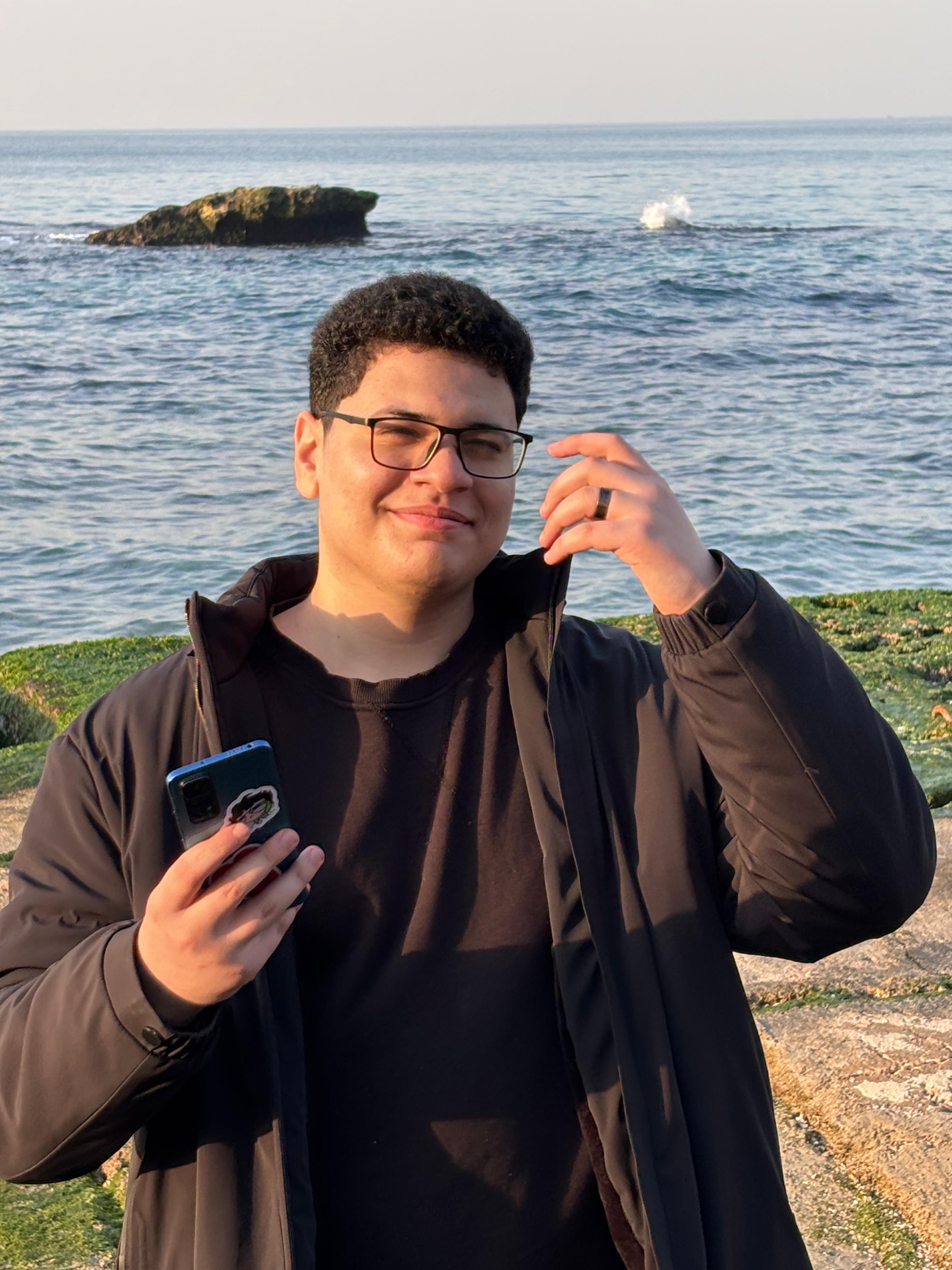
I’m Omar, I went from editing other people’s stories to designing products people can actually use.
Two years freelancing as a video editor taught me how to hold someone’s attention. UI/UX taught me how to respect it. Now I design accessible, research-backed interfaces for teams who care about the people on the other side of the screen.
Design philosophy,
Good design comes from good reasoning.
A UI without UX is a pretty painting that doesn’t do its job. Before I open Figma I want to know who I’m designing for, the patterns they already trust, and what the business actually needs to win.
I also design for the people who get left out. I’ve studied accessibility seriously, and I build every project to WCAG AA — because “works for everyone” is just a higher bar of “works.”
What I’m good at,
UX Research
I use Google search operators, AI-assisted synthesis, and structured note-taking to move fast without cutting corners. My goal is to surface the real problem before anyone opens a design tool — so the decisions that follow are grounded in both user needs and business constraints.
Information Architecture
Great navigation is invisible. I stick to established mental models and industry conventions because users shouldn’t have to relearn how software works. My job is to map out a structure where the next step always feels obvious — before the first pixel is placed.
Interaction Design
I treat motion as a communication tool, not decoration. A drop-shadow shift on hover, a subtle stroke change on selection — each micro-interaction earns its place by making state changes legible. If an animation doesn’t help the user understand what just happened, it doesn’t ship.
Accessibility (WCAG AA)
I design for neurodiversity, which means speed, clarity, and scannability come first. Every project I ship clears WCAG AA contrast and focus requirements — not as an afterthought, but baked into the decisions from the start. Good accessibility and good design point in the same direction.
Visual & Type
My visual process starts with the problem, not the aesthetic. I sketch low-fidelity solutions to validate structure before I touch colour or type. By the time a design looks polished, it’s already been tested against the use case — the craft serves the function, not the other way around.
Handoff & Build
I know enough HTML and CSS to have honest conversations with developers. I don’t design layouts that ignore how browsers work, and my Figma files are structured so that a developer can open them and understand the intent without a lengthy call. Less friction at handoff means fewer compromises in the final product.
The deep-skill timeline,
-
2024 – 2025
Freelance video editor
Built a multi-region client roster across gaming, travel, and agency work — Egypt, the Gulf, and Europe. Learned how to communicate clearly with clients, hit deadlines, and make creative decisions under pressure.
-
2026
Switched to UI/UX
Kept encountering well-branded products with broken flows. Decided to learn how to fix the cause. Built my own self-taught curriculum — 15 modules covering design thinking, Figma, research, prototyping, and accessibility — and worked through it start to finish.
-
now
Shipping case studies for real problems
Applying the process to full end-to-end case studies: research, IA, wireframes, high-fidelity, and dev-ready handoff. Open to UI/UX roles and freelance projects with European and remote-first businesses.
The toolbox,